What Is Turing Completeness?
Turing Completeness refers to the ability of a system—typically a programming language or computational model—to simulate any Turing machine. In simpler terms, if a system is Turing complete, it can perform any computation that any other programmable computer can, given enough time and memory.
Named after Alan Turing, the pioneer of modern computation, this concept is central to understanding what “general-purpose” computing really means.
If a programming language is Turing complete, you can write any program with it — from a calculator to a game engine or even a virtual brain.
Where the Term Comes From
In 1936, Alan Turing introduced the Turing machine — an abstract mathematical model that could simulate the logic of any algorithm. It had:
- An infinite tape (memory)
- A read/write head
- A set of states and transition rules
If a system can emulate the operations of this theoretical machine, it is said to be Turing complete.
Core Features Required for Turing Completeness
To be Turing complete, a system generally must support:
| Feature | Why It Matters |
|---|---|
| Conditional branching (IF/ELSE) | Decision-making logic |
| Repetition or loops (WHILE, FOR, RECURSION) | Enables iteration |
| Manipulation of arbitrary memory | Ability to read/write and store state |
| Input/output mechanisms | To interact with data or users |
Examples of Turing Complete Systems
| System or Language | Turing Complete? | Notes |
|---|---|---|
| Python, Java, C, JavaScript | ✅ Yes | General-purpose programming languages |
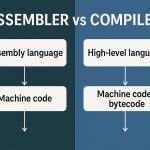
| x86 Assembly, ARM, MIPS | ✅ Yes | Low-level machine code |
| Brainfuck | ✅ Yes | Esoteric, minimal Turing machine emulator |
| Excel formulas | ❌ No (usually) | Cannot do general recursion (without tricks) |
| Turing Machine (theoretical) | ✅ Yes | Basis for the definition |
| HTML/CSS | ❌ No | Descriptive, not computational |
| CSS + animation timers (abused) | ⚠️ Possibly | Turing complete with hacks |
Practical Interpretation
If a programming language or system is Turing complete, then:
- You can implement loops, conditionals, and data storage.
- You can simulate any algorithm or computational process.
- You are not limited in what kinds of logic you can express.
That doesn’t mean it’s easy, just that it’s possible.
Turing Completeness vs Real-World Constraints
Being Turing complete assumes infinite memory and time, which is not realistic in actual systems. Real-world computing is subject to:
- Memory limits
- Timeouts
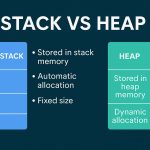
- Stack overflow from deep recursion
- CPU/battery limits
- Permissions/security barriers
So a language may be Turing complete in theory, but practically constrained in execution.
Why Turing Completeness Matters
1. Language Design
Languages like Python, Java, or JavaScript are designed to be Turing complete to allow for full-featured software development.
2. Virtual Machines and Blockchain
Many blockchain platforms (like Ethereum) use Turing complete scripting to allow smart contracts. However, they must impose gas limits to prevent infinite loops.
3. Esoteric Languages
Languages like Brainfuck, LOLCODE, and Whitespace exist mostly to test the limits of Turing completeness.
Turing Incompleteness (by Design)
Some systems are deliberately Turing incomplete to avoid complexity or ensure safety:
- SQL (standard SELECT queries): Can’t loop, hence not Turing complete
- Regular expressions: Finite state machines, can’t count arbitrarily
- Markdown: Formatting only, not computation
- Smart contract languages (some versions): Restrict loops to avoid denial-of-service attacks
These systems trade power for safety, speed, or predictability.
Thought Experiment: Can Excel Be Turing Complete?
Standard Excel formulas (without VBA/macros) are not Turing complete because:
- No native loops or recursion
- No arbitrary memory allocation
However, with circular references and clever hacks, some argue Excel can simulate limited recursion, making it “quasi-Turing complete.”
Code Example: Demonstrating Turing Completeness
Let’s look at a minimal Python example with conditionals and recursion — the core features of a Turing complete language.
Example: Compute Factorial
def factorial(n):
    if n == 0:
        return 1
    else:
        return n * factorial(n - 1)

print(factorial(5))  # Output: 120
This uses:
- Conditionals (
if) - Recursion
- Arithmetic and memory (call stack)
Hence, Python is Turing complete.
The Halting Problem
Alan Turing also proved that no Turing complete system can determine, in general, whether any program will eventually halt.
This is known as the Halting Problem — an inherent limitation of all Turing complete systems.
If your system is powerful enough to express anything, it’s also powerful enough to get stuck forever.
That’s why languages with looping or recursion must have timeouts or limits in real-world use.
Turing Completeness in Non-Traditional Systems
You might be surprised where Turing completeness shows up:
| System | Notes |
|---|---|
| Minecraft Redstone | Can simulate memory, logic gates, even CPUs |
| Conway’s Game of Life | A cellular automaton that is Turing complete |
| Magic: The Gathering | A legal combination of cards can simulate any Turing machine |
| PowerPoint animations | With click triggers and macros, it’s possible (though absurd) |
This illustrates that Turing completeness is a logical, not technical, property.
Best Practices for Developers
- ✅ Understand what Turing completeness allows, not just what it means
- ✅ Avoid infinite loops and stack overflows in practice
- ✅ Recognize when non-Turing complete systems are better for safety (e.g., DSLs, configs)
- ✅ Choose restricted languages when security and predictability matter
- ✅ Use formal verification tools when working with Turing complete smart contracts
Summary
- Turing completeness is the ability of a system to perform any computation, given enough time and memory.
- It is a theoretical property based on Turing machines.
- Most modern programming languages are Turing complete by design.
- Not all systems need to be Turing complete — sometimes restrictions are safer.
- Turing completeness enables flexibility, but also introduces risks like infinite loops and halting uncertainty.
“A system powerful enough to express everything is also powerful enough to break everything.”
Related Keywords
- Alan Turing
- Turing Machine
- Halting Problem
- Computability
- Recursion
- Looping
- Conditional Logic
- Church-Turing Thesis
- Finite State Machine
- Regular Expressions
- Esoteric Programming Languages
- Brainfuck
- Smart Contracts
- Ethereum Virtual Machine
- Gas Limit
- Simulation
- Formal Verification
- Language Expressiveness
- Undecidability
- Theoretical Computer Science