What Is Cognitive Computing?
Cognitive Computing is a subfield of artificial intelligence (AI) focused on simulating human thought processes in a computerized model. It aims to replicate the way the human brain processes information — through perception, reasoning, learning, and decision-making.
“Cognitive computing is not just about automation — it’s about augmentation of human intelligence.”
The goal is to build systems that can:
- Understand natural language
- Interpret unstructured data
- Reason through context
- Learn from interaction
- Adapt dynamically
1. Key Characteristics of Cognitive Computing
| Feature | Explanation |
|---|---|
| Contextual | Understands time, place, meaning, and user intent |
| Adaptive | Learns and evolves from new data without explicit programming |
| Interactive | Communicates naturally with humans (voice, text, visual) |
| Iterative | Refines responses based on feedback |
| Stateful | Maintains memory of past interactions (short-term and long-term context) |
| Probabilistic | Works with uncertainty and offers confidence-based suggestions |
Unlike traditional software (rule-based), cognitive systems make informed estimations, not binary decisions.
2. Cognitive Computing vs Artificial Intelligence
| Aspect | Cognitive Computing | Artificial Intelligence |
|---|---|---|
| Objective | Mimic human thought | Automate tasks intelligently |
| Output | Suggestion or insight | Decision or action |
| Architecture | Feedback-based, probabilistic | Goal-oriented, deterministic or statistical |
| Role | Assists humans (augmented intelligence) | May replace human tasks |
| Example | IBM Watson helping doctors | Self-driving car navigating autonomously |
Cognitive computing is often seen as a subset or application-oriented layer of AI, with a stronger emphasis on human interaction and decision support.
3. Key Technologies Enabling Cognitive Computing
a) Natural Language Processing (NLP)
Enables systems to read, understand, and generate human language.
- Syntax parsing
- Named Entity Recognition (NER)
- Sentiment analysis
- Language translation
b) Machine Learning (ML)
Helps systems recognize patterns and learn from data.
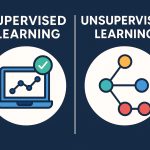
- Supervised, unsupervised, reinforcement learning
- Deep learning (especially for speech and vision)
c) Computer Vision
Processes visual data:
- Facial recognition
- Image classification
- Scene understanding
d) Speech Recognition & Synthesis
Turns speech into text (STT) and vice versa (TTS).
e) Knowledge Representation
Structures data in meaningful formats:
- Ontologies
- Semantic networks
- Knowledge graphs
f) Decision Support Systems
Combines analytics with logic to recommend decisions under uncertainty.
4. Examples of Cognitive Computing Systems
🧠 IBM Watson
- Famous for winning Jeopardy! in 2011
- Helps doctors diagnose diseases, especially rare cancers
- Parses millions of research papers, patient records, and symptoms
🗣️ Amazon Alexa / Google Assistant
- Uses NLP + machine learning to process and respond to voice queries
- Context-aware conversations, reminders, personalization
🏥 Healthcare Diagnosis Tools
- Analyze MRI, genetic data, EHRs to assist in decision-making
- Suggest likely diagnoses or treatment paths
📄 Intelligent Document Processing
- Extract data from contracts, forms, or invoices
- Used in finance, insurance, legal sectors
5. The Cognitive Computing Pipeline
Input → Understanding → Reasoning → Learning → OutputStep-by-Step:
- Ingests raw data (structured/unstructured)
- Interprets using NLP and semantic analysis
- Finds patterns using ML models
- Weighs evidence probabilistically
- Generates hypotheses or ranked recommendations
- Learns from corrections or new input
6. Data in Cognitive Computing
| Data Type | Description | Example |
|---|---|---|
| Structured | Tabular or relational | Databases, spreadsheets |
| Unstructured | Free-form content | Emails, articles, social media |
| Semi-structured | Tagged data | XML, JSON, logs |
| Multimodal | Mixed formats | Video + audio + text |
Cognitive systems excel in unstructured and multimodal data — which represents over 80% of all enterprise data.
7. Use Cases Across Industries
| Industry | Use Case |
|---|---|
| Healthcare | Clinical decision support, medical imaging, drug discovery |
| Finance | Risk analysis, fraud detection, customer profiling |
| Legal | Contract analysis, e-discovery, compliance |
| Retail | Personalized recommendations, chatbots, trend analysis |
| Education | Adaptive learning platforms, tutoring systems |
| Manufacturing | Predictive maintenance, supply chain optimization |
| Cybersecurity | Threat detection, behavioral anomaly analysis |
8. Benefits of Cognitive Computing
| Advantage | Impact |
|---|---|
| Better decisions | Informed, data-backed insights |
| Enhanced efficiency | Automates repetitive data analysis |
| Deeper personalization | Learns individual user preferences |
| Scalability | Processes large-scale data across domains |
| Reduced risk | More accurate forecasts, early detection of issues |
| Augmented intelligence | Complements human expertise |
9. Limitations and Challenges
| Challenge | Explanation |
|---|---|
| Data bias | Cognitive systems can inherit bias from training data |
| Explainability | Hard to understand decisions from deep models |
| Privacy concerns | Especially when processing personal or sensitive data |
| Data integration | Difficult to merge diverse data formats and sources |
| Domain expertise | Needs human validation and alignment with real-world logic |
| Ethical boundaries | Should not replace human empathy or critical judgment |
10. Cognitive Computing vs Traditional Programming
| Feature | Traditional Software | Cognitive Systems |
|---|---|---|
| Behavior | Deterministic, rule-based | Probabilistic, pattern-based |
| Input type | Structured only | Structured + Unstructured |
| Flexibility | Requires reprogramming | Learns and adapts |
| User interaction | Button-click interfaces | Conversational, human-like |
| Decision making | Logic encoded manually | Learns from experience |
11. Programming Tools & Frameworks
| Tool/Platform | Role |
|---|---|
| Python | Core language for ML, NLP, and cognitive workflows |
| TensorFlow / PyTorch | Deep learning frameworks |
| spaCy / NLTK | Natural language understanding |
| Watson Developer Cloud | IBM’s suite of cognitive APIs |
| Dialogflow / Rasa | Conversational agent frameworks |
| Neo4j | Knowledge graph management |
| OpenAI APIs | GPT-like models for cognitive tasks |
12. The Future of Cognitive Computing
- Multimodal systems: Seamlessly combining text, image, audio, video
- Edge computing: Cognitive abilities deployed on IoT devices
- Emotional AI: Understanding user emotions for more humanlike interactions
- Neurosymbolic AI: Combining neural networks with logic-based reasoning
- Autonomous decision-making: Real-time adaptive systems in critical domains
Cognitive computing will increasingly act as collaborator, not just tool, in areas like law, medicine, design, and engineering.
Summary
Cognitive computing represents the evolution of artificial intelligence from logic and automation toward understanding and reasoning — systems that think with us, not just for us. While still imperfect, it provides a powerful framework for tackling ambiguous, unstructured, and human-centered problems across industries.
“Where AI replaces humans, cognitive computing empowers them.”
Related Keywords
- Artificial Intelligence
- Machine Learning
- Deep Learning
- Natural Language Processing
- Decision Support
- Expert Systems
- Human-Computer Interaction
- Semantic Analysis
- Knowledge Graph
- Reinforcement Learning
- Cognitive Architecture
- Watson
- Conversational AI
- Probabilistic Reasoning
- Emotion AI
- Neuro-Symbolic AI
- Speech Recognition
- Pattern Recognition
- Unstructured Data
- Multimodal Systems