Description
Java Virtual Machine (JVM) is a critical component of the Java Runtime Environment (JRE) that enables Java applications to run on different hardware and operating systems without modification. The JVM provides a layer of abstraction between compiled Java bytecode and the underlying operating system, making Java a platform-independent language. It does this by interpreting or compiling bytecode into machine-specific instructions at runtime.
While primarily designed to run Java applications, the JVM also supports other languages that compile to bytecode, such as Kotlin, Scala, Groovy, Clojure, and JRuby, making it a central engine for many enterprise and cross-platform applications.
How It Works
The JVM operates as a virtual engine that executes compiled .class files produced by the Java compiler (javac). These files contain bytecode, a low-level, platform-neutral set of instructions that the JVM understands.
The process typically follows this sequence:
- Source Code: Developer writes Java code.
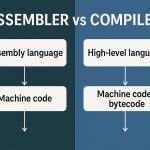
- Compiler: Java code is compiled into bytecode using
javac. - Bytecode: The
.classfile contains the bytecode. - JVM: The JVM reads bytecode and executes it on the host machine.
Core Components
1. Class Loader Subsystem
Responsible for loading, linking, and initializing classes. It ensures that classes are loaded only when needed.
- Bootstrap ClassLoader: Loads core Java classes from
rt.jar. - Extension ClassLoader: Loads classes from the
extdirectory. - Application ClassLoader: Loads classes from the classpath.
2. Runtime Data Areas
The JVM organizes memory into several runtime data areas:
- Method Area: Stores class structures, methods, and static variables.
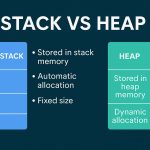
- Heap: Stores objects and class instances (shared among threads).
- Java Stack: Each thread has its own stack to store method calls and local variables.
- Program Counter Register: Indicates the current instruction being executed.
- Native Method Stack: Supports execution of native methods (non-Java, platform-specific).
3. Execution Engine
Responsible for executing the bytecode. It includes:
- Interpreter: Reads and executes bytecode instructions one by one.
- JIT (Just-In-Time) Compiler: Compiles bytecode into native machine code for better performance.
- Garbage Collector: Frees up memory by removing unused objects from the heap.
Bytecode Example
Java Code:
public class HelloWorld {
    public static void main(String[] args) {
        System.out.println("Hello, World!");
    }
}
Bytecode (simplified):
0: getstatic     #2
3: ldc           #3
6: invokevirtual #4
9: return
Portability
The motto of Java is “Write Once, Run Anywhere.” Thanks to the JVM, the same compiled bytecode can run on Windows, Linux, or Mac without changes.
Languages Running on JVM
Besides Java, many languages target the JVM:
- Kotlin: Android development and modern enterprise apps.
- Scala: Functional programming and big data (Apache Spark).
- Groovy: Scripting and Gradle build automation.
- Clojure: Lisp dialect designed for concurrency.
- JRuby: Ruby implementation for JVM.
Memory Management
The JVM handles memory allocation and garbage collection automatically:
- Automatic Allocation: Objects are created on the heap.
- Garbage Collection: Detects and removes unreachable objects.
Garbage collection strategies include:
- Generational GC
- Parallel GC
- G1 (Garbage First) GC
Performance Tuning
The JVM can be tuned using command-line arguments:
java -Xms512m -Xmx2g -XX:+UseG1GC -XX:+PrintGCDetailsThese flags configure initial and max heap size, GC type, and logging.
Security Features
- Bytecode Verification: Ensures code doesn’t perform illegal operations.
- ClassLoader Isolation: Prevents untrusted code from accessing core classes.
- SecurityManager API: Restricts file, network, and system access.
Monitoring Tools
Java provides many tools for monitoring and debugging the JVM:
- JConsole: Real-time performance monitoring.
- VisualVM: Visual analysis of memory, threads, and classes.
- jstat, jmap, jstack: Command-line tools for JVM internals.
JVM vs JRE vs JDK
| Component | Description |
|---|---|
| JVM | Executes bytecode |
| JRE | JVM + libraries for running Java apps |
| JDK | JRE + development tools (javac, debugger) |
Summary
The JVM is the cornerstone of Java’s platform independence, allowing code to be written once and executed on any system that supports the JVM. Its robust memory management, runtime optimization, and language interoperability make it a powerful environment for developing scalable, secure, and portable applications. Mastering JVM internals is key for optimizing performance and understanding the behavior of Java-based systems.