Description
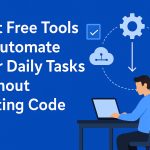
No-Code and Low-Code Platforms are development environments that allow users to build software applications with minimal to no traditional coding. These platforms rely on visual interfaces, drag-and-drop components, pre-built templates, and automation workflows to speed up app development. They are designed for both non-developers (citizen developers) and professional developers, depending on the complexity of the task.
While No-Code is geared toward users with no programming knowledge, Low-Code platforms provide a mix of visual tools and limited custom scripting for added flexibility.
These platforms are rapidly transforming how organizations build internal tools, customer-facing apps, automation scripts, and even AI workflows — reducing time-to-market, increasing agility, and lowering development costs.
Why No-Code/Low-Code Is Gaining Traction
- ⚡ Speed: Build apps in days, not months.
- 💰 Cost Savings: Reduce dependency on large development teams.
- 👥 Accessibility: Enables business users to create their own solutions.
- 🔁 Agility: Easily update or iterate on applications.
- 📱 Cross-Platform: Many platforms offer one-click mobile and web deployment.
- 🤝 Collaboration: Encourages shared ownership of applications between business and IT.
No-Code vs Low-Code: Key Differences
| Feature | No-Code | Low-Code |
|---|---|---|
| Target Users | Business users, non-tech staff | Developers, tech-savvy users |
| Coding Needed | None | Some scripting or configuration |
| Customization | Limited | Flexible and extensible |
| Complex Apps | Not ideal | More suitable |
| Use Cases | Forms, dashboards, workflows | Integrations, databases, APIs |
| Examples | Glide, Bubble | OutSystems, Mendix |
Common Use Cases
1. Internal Tools
- Employee onboarding dashboards
- Inventory tracking systems
- Approval workflows
2. Customer-Facing Apps
- Appointment booking systems
- Product catalogs
- Custom forms
3. Automation Workflows
- Email responders
- Data migration pipelines
- Notifications and alerts
4. Data Dashboards
- Real-time analytics
- KPI tracking
- Google Sheets integrations
5. E-Commerce
- No-code storefronts
- Product listings
- Payment integrations
Popular No-Code/Low-Code Platforms
| Platform | Type | Highlights |
|---|---|---|
| Airtable | No-Code | Spreadsheet-database hybrid with rich API and automations |
| Bubble | No-Code | Visual web app builder with backend logic and database |
| Zapier | No-Code | Automation between 5000+ web apps |
| Glide | No-Code | Build apps from Google Sheets |
| OutSystems | Low-Code | Enterprise-grade app builder with DevOps integration |
| Mendix | Low-Code | Model-driven platform for complex enterprise apps |
| Microsoft Power Apps | Low-Code | Part of Power Platform, integrates with Office 365 and Azure |
| Appgyver | No-Code | Drag-and-drop mobile app builder |
| Retool | Low-Code | Internal tool builder for developers and data analysts |
Core Features to Look For
- Visual Editor
Drag-and-drop interface to design UI and workflows. - Prebuilt Templates
Starter apps for use cases like CRM, HR, finance, or ticketing. - Data Integration
Connect with external APIs, databases, or spreadsheets. - User Authentication
Login, registration, and access control features. - Workflow Automation
Trigger actions based on events, inputs, or schedules. - Deployment
One-click publishing to web or mobile platforms. - Collaboration
Multi-user editing and team roles.
Advantages of No-Code/Low-Code Platforms
✅ Rapid Prototyping
Ideal for MVPs or proof-of-concept applications.
✅ Lower Development Costs
Reduce time and personnel needed to launch an app.
✅ User Empowerment
Non-technical users can solve their own problems without IT.
✅ Easier Maintenance
Visual workflows make updates simple and non-disruptive.
✅ Integration Friendly
Easily plug into services like Google Sheets, Slack, or Stripe.
✅ Built-in Hosting
Many platforms offer automatic backend and deployment.
Limitations and Risks
❌ Vendor Lock-In
Some platforms don’t allow easy migration of data or logic.
❌ Limited Scalability
Not ideal for apps requiring millions of users or custom infrastructure.
❌ Performance Bottlenecks
Complex logic or workflows may degrade performance.
❌ Security Concerns
Less control over data protection and app internals.
❌ Customization Limits
Advanced logic or third-party SDKs may be unsupported.
❌ Learning Curve
Although marketed as easy, advanced features still require platform knowledge.
No-Code/Low-Code and DevOps
Modern platforms increasingly support DevOps best practices such as:
- Version control with Git integration
- Environment branching (dev, staging, production)
- Role-based access control
- Logging and monitoring
- CI/CD hooks for external automation
Sample Workflows
No-Code Example: Zapier Workflow
Trigger: New row in Google Sheets
→ Action 1: Format the data
→ Action 2: Create contact in Mailchimp
→ Action 3: Send Slack notification
Low-Code Example: Power Apps + Azure Function
Form input (Power App)
→ Sends data to Azure Function (custom logic)
→ Writes to SQL Server
→ Triggers email using Power Automate
Best Practices
- Start with simple use cases (e.g., internal dashboards, automation scripts)
- Document workflows using visual diagrams or embedded comments
- Avoid overloading a single app with unrelated functions
- Ensure data validation and input sanitization even in visual builders
- Review pricing models — platforms often charge by tasks, rows, or API calls
- Use custom code sparingly to preserve portability
- Regularly export data or use APIs to avoid vendor lock-in
- Train non-technical users with templates and guided tutorials
Key Snippets
Bubble – Display a List of Items
Use “Repeating Group” to show a list from your database
Bind it to a data type (e.g., “Tasks”)
Set constraints like: Status = “Incomplete”
Airtable Formula Example
IF({Status} = "Completed", "✅", "🕒")Glide Conditional Action
IF userEmail IS [email protected]
→ Show Admin Dashboard
ELSE
→ Show User Dashboard
Related Keywords
API Integration
App Builder
Automation Workflow
Business Logic Layer
Citizen Developer
Component Library
Cross Platform App
Data Binding
Drag And Drop UI
Internal Tool Builder
MVP Prototyping
No Code App
Power Platform
SaaS Builder
Template Based Design
Third Party Integration
UI Workflow Editor
Visual Development
Workflow Automation
Zapier Integration