Description
In computer science, an object refers to a fundamental building block in object-oriented programming (OOP). An object is an instance of a class that encapsulates both data (attributes) and behavior (methods). Objects allow programmers to model real-world entities in software design and enable modular, reusable, and scalable code structures.
Objects typically have:
- Identity: A unique identifier for each object.
- State: Data stored in fields or attributes.
- Behavior: Functions or methods that operate on the object’s data.
Object in Various Programming Languages
| Language | Syntax Example | Notes |
|---|---|---|
| Python | obj = MyClass() | Uses classes, dynamic typing |
| Java | Object obj = new Object(); | Strongly typed, based on class structure |
| C++ | MyClass obj; | Can allocate on stack or heap |
| JavaScript | let obj = { key: 'value' }; | Object literals are common |
| Ruby | obj = Object.new | Everything is an object |
| Swift | var obj = MyClass() | Uses classes and structs |
Anatomy of an Object
Example in Python:
class Dog:
    def __init__(self, name, breed):
        self.name = name
        self.breed = breed

    def bark(self):
        return f"{self.name} says woof!"

my_dog = Dog("Buddy", "Golden Retriever")
print(my_dog.bark()) # Output: Buddy says woof!Dogis the classmy_dogis an instance (object)nameandbreedare attributesbark()is a method
Object-Oriented Principles
- Encapsulation: Objects bundle data and methods, hiding internal complexity.
- Abstraction: Expose only necessary features.
- Inheritance: Objects can inherit traits from parent classes.
- Polymorphism: Objects can be treated as instances of their parent class.
Object vs Class
| Concept | Description |
| Class | Blueprint/template for creating objects |
| Object | An instance of a class, with actual data |
Memory Representation
Objects are stored in memory as a collection of fields and method pointers. The actual structure may vary depending on the language and runtime.
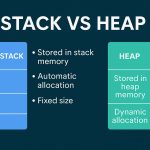
In Python, objects are stored in the heap and referenced by pointers. In C++, stack allocation is also possible.
Object Lifecycle
- Instantiation – Creation of an object from a class
- Initialization – Setting up initial values via constructors
- Usage – Calling methods and accessing attributes
- Destruction – Object is deleted or garbage collected
Common Methods Associated with Objects
In Python:
__init__: Constructor__str__: String representation__eq__: Equality comparison__repr__: Official string representation
Object-Oriented vs Procedural
| Feature | Object-Oriented | Procedural |
| Structure | Based on objects and classes | Based on functions and procedures |
| Reusability | Encourages reuse via inheritance | Harder to reuse modularly |
| Real-world mapping | Models entities like users, books, etc. | Often logic-driven |
Objects in JavaScript
const car = {
  brand: "Toyota",
  model: "Corolla",
  honk: function() {
    console.log("Beep beep!");
  }
};

car.honk();  // Beep beep!
Object-Oriented Libraries
Many libraries and frameworks are built using object-oriented principles:
- Django (Python): Uses object models for database representation.
- Spring (Java): Strongly object-oriented structure.
- React (JavaScript): Component-based architecture (object-like behavior).
- Qt (C++): GUI toolkit structured around objects and signals/slots.
Summary
Objects are core elements of object-oriented programming. They encapsulate state and behavior, offer modularity, and provide a framework for designing scalable, reusable systems. Understanding how objects are created, manipulated, and destroyed is essential for modern software development.
Related Terms
- Class
- Encapsulation
- Method
- Instance
- Constructor
- Polymorphism
- Abstraction
- Object-Oriented Programming
- Garbage Collection
- Interface