Definition
Active ETF performance refers to how well an actively managed exchange-traded fund delivers returns relative to its stated investment objective, benchmark, or peer group, after accounting for fees, volatility, and risk. Unlike passive ETFs that aim to replicate an index, active ETFs seek to outperform it, making performance measurement more nuanced and multi-dimensional.
Performance is not just about absolute return — it also includes metrics like risk-adjusted returns, alpha generation, consistency, and relative success against traditional mutual funds or passive strategies.
How Active ETFs Work (Recap for Performance Context)
Active ETFs are managed by professional portfolio managers who make tactical decisions about what securities to buy, hold, or sell. Their decisions are based on:
- Fundamental analysis
- Macroeconomic indicators
- Factor exposure (value, momentum, quality, etc.)
- Risk management models
- Forecasting and market sentiment
These strategies are packaged within the ETF structure, which provides intraday trading, tax efficiency, and liquidity. Because of this hybrid nature, analyzing performance requires looking at both investment decisions and structural advantages.
How to Measure Active ETF Performance
Measuring the performance of an active ETF goes beyond simply looking at total returns. Here are the key performance metrics:
1. Total Return (Absolute Performance)
- Measures how much the ETF gained or lost over a given period.
- Includes:
- Price appreciation
- Reinvested dividends
Example: If an ETF grew from $100 to $112 in one year (including dividends), the total return is 12%.
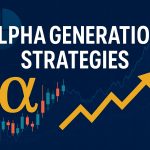
2. Alpha
- A measure of excess return relative to a benchmark, adjusted for market risk.
- Positive alpha means the manager added value through selection or timing.
Formula:
Alpha = Actual Return – (Benchmark Return × Beta)3. Beta
- Indicates how much the ETF moves relative to the market.
- A beta of 1.2 means the ETF tends to move 20% more than the market.
4. Sharpe Ratio
- Measures risk-adjusted return. How much return is generated per unit of risk (volatility).
- Higher Sharpe = more efficient risk-taking.
Formula:
Sharpe Ratio = (Portfolio Return – Risk-Free Rate) / Standard Deviation5. Tracking Difference
- While active ETFs aren’t trying to match an index, many still reference a benchmark.
- The difference between fund performance and benchmark is a vital metric.
6. Consistency
- Evaluated by how often the ETF outperforms its benchmark or peer group over multiple periods (e.g., 1-year, 3-year, 5-year).
- Rolling returns and calendar-year returns help measure consistency.
Historical Performance: What the Data Shows
Overall Trends
- A minority of active ETFs outperform their benchmarks consistently over time.
- According to Morningstar and S&P SPIVA data:
- Over a 5-year period, only ~25%–35% of active equity fund managers outperform their benchmarks net of fees.
- Fixed-income active ETFs have fared better, especially in volatile rate environments.
Performance Drivers
- Manager Skill (Alpha Generation)
- Genuine skill can produce long-term outperformance, but it’s rare and hard to predict.
- Market Conditions
- Active ETFs may outperform in:
- High volatility
- Bear markets
- Niche or inefficient markets (e.g., small-cap, emerging markets)
- Active ETFs may outperform in:
- Cost Structure
- Expense ratios erode alpha. A 1.5% return advantage may be nullified by high fees.
- Vanguard, Fidelity, and other low-fee providers increase chances of net outperformance.
- Active Share
- Measures how different the ETF’s holdings are from its benchmark.
- Higher active share = more opportunity for alpha — but also more risk of underperformance.
Use Cases / Examples
Example 1: Outperformance in Small-Cap Sector
An active ETF focused on small-cap U.S. stocks might avoid overpriced meme stocks or risky sectors, while favoring profitable, undervalued firms. If the Russell 2000 returns 4% and the ETF returns 7.5%, it outperforms with +3.5% alpha.
Example 2: Fixed-Income Advantage
During a rising interest rate cycle, a passive bond ETF might suffer losses due to fixed duration. An active bond ETF might shorten its duration, rotate to floating-rate notes, and generate less downside or even modest gains.
Example 3: Thematic Bet That Backfires
An active ETF betting on clean energy might lag the S&P 500 if oil stocks outperform. This is a thematic misalignment — showing that even well-researched strategies can underperform if macro trends go the other way.
Advantages of Strong Active ETF Performance
✅ Potential for Alpha
Active ETFs offer the opportunity to beat the market, something index ETFs cannot do by definition.
✅ Flexibility in Changing Markets
Managers can shift exposure in real time, potentially avoiding downturns or taking advantage of sector rotations.
✅ Risk-Adjusted Strategies
Some active ETFs aim for lower volatility or targeted risk exposures, which can improve long-term compounding.
✅ Niche Exposure
Active ETFs excel in inefficient markets where data is sparse or mispricings are common — such as emerging markets, small-cap stocks, or convertible bonds.
Disadvantages and Limitations
❌ Inconsistent Performance
Most active strategies don’t beat their benchmarks consistently, especially after fees.
❌ Higher Costs
Expense ratios for active ETFs typically range from 0.20% to 0.80%, versus 0.03%–0.10% for passive ETFs.
❌ Manager Risk
Performance depends heavily on the fund manager’s skill, experience, and decisions — a human variable.
❌ Behavioral Traps for Investors
Investors may chase past performance, buy high, sell low, or fail to hold through underperforming years.
How to Evaluate an Active ETF Before Investing
- Check Long-Term Performance (3–5 years minimum)
- Compare to Benchmark or Passive Peer
- Understand the Strategy (factor-based, thematic, macro?)
- Review Risk Metrics (volatility, drawdown)
- Examine Fee Structure
- Look at Turnover Rate and Tax Efficiency
- Evaluate Active Share
Tip: Consistency and risk-adjusted returns matter more than raw outperformance.
Related Terms
- Alpha – Measure of excess return over a benchmark.
- Beta – Sensitivity to market movement.
- Sharpe Ratio – Return per unit of volatility.
- Standard Deviation – Measurement of volatility.
- Expense Ratio – Annual fee percentage for managing the ETF.
- Benchmark – The index or composite the ETF aims to beat or reference.
- Factor Investing – Strategy that targets known performance drivers like value, momentum, or low volatility.
- Active Share – How much an ETF deviates from its benchmark in holdings.
Real-World Examples
- ARKK (ARK Innovation ETF)
- Known for explosive growth in 2020, massive underperformance in 2022.
- High volatility, high alpha potential, high risk.
- JEPI (JPMorgan Equity Premium Income ETF)
- Offers strong risk-adjusted performance by combining blue-chip stocks with covered calls.
- Popular with income investors seeking lower volatility and monthly distributions.
- VFMF (Vanguard U.S. Multifactor ETF)
- Blends value, momentum, and quality factors.
- Modest outperformance historically with low costs (0.18% expense ratio).
Conclusion
Active ETF performance is a mixed bag — but a promising one. While not all active ETFs outperform, the structure allows for:
- Tactical decision-making
- Niche exposure
- Tax-efficient alpha-seeking strategies
- Real-time adjustments in volatile markets
For investors willing to analyze strategies, evaluate risk, and remain patient, active ETFs can offer a valuable edge. But performance isn’t guaranteed — and selecting the right fund requires just as much diligence as any stock or sector investment.
In a world of uncertainty, understanding how active ETFs work and perform is essential to making smart, strategic portfolio choices.